
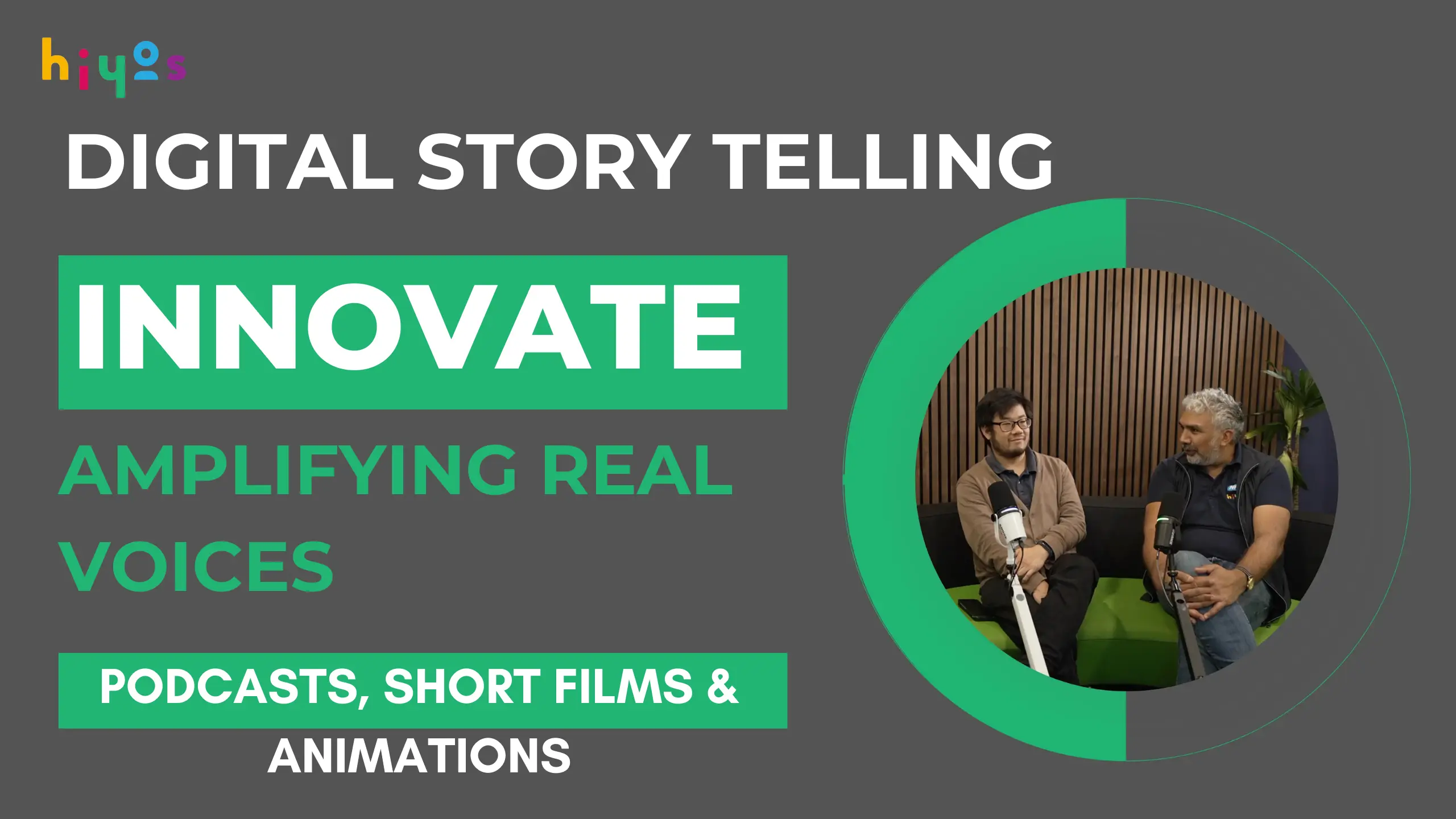
Innovate
Digital Storytelling: Amplifying Real Voices with Podcasts, Short Films & Animation
We produce accessible digital storytelling — social posts, podcasts, animations, short films and mini‑documentaries — co‑produced with patients, volunteers and staff to ensure authenticity and respect.
Our clinicians use public‑health, practice and anonymised social‑media behavioural data to identify what people need to hear and the best way to say it. We simplify complexity. The main aim is to support behaviour change with evidence based advice from experts. We support contributors through consent, scripting, coaching, then combine lived testimony with professional editing, animation, captions and clear audio so every piece is inclusive, clinically accurate and easy to share.
If you are a health or health tech organisation and want to work with us email admin@hiyos.org or share your email on this form.
Podcasts
To inform, reassure and support behaviour change by giving patients a voice and clinicians a platform to explain care, bust myths and share practical advice. We have done series on women’s health, diabetes and asthma. This is a clip from our asthma podcast series.
Approach / Production.
Episodes mix lived experience, expert interviews and evidence summaries. Formats include short FAQs, patient panels and feature episodes (15–40 mins). Outlines are scripted, clinically reviewed and produced with professional audio editing.
Co‑design & Consent.
Episodes are co‑produced with patients, volunteers and staff. Contributors receive consent briefings, on‑mic coaching and support throughout recording. Transcripts are produced and anonymisation offered where needed.
Accessibility.
All episodes include transcripts, show notes, and short social clips. Trigger warnings are used for sensitive topics.
Distribution & Formats.
Published on podcast platforms and embedded on practice websites; promoted via social posts, clips and waiting‑room screens. Series can be short runs (e.g. 6 episodes) or ongoing.
Measurement & Impact.
Measured by listens, completion rates, social engagement, website referrals and service enquiries. Example: from the women’s health series, with consultants from Chelsea and Westminister hospital, we made 5 podcasts, 362 social posts, ~87k impressions, ~1,400 engagements; 74% female audience.
What we offer others.
Co‑design and produce series tailored to clinical aims, provide channel strategy, create clips/transcripts, and set up evaluation metrics., include trigger warnings when needed, and are published with transcripts and short social clips.
Short films
Purpose
To combine story, emotion and practical information so people recognise symptoms, find help and act on prevention or care pathways. This is a clip around the issue of impact on children when her mother is a victim of domestic violence, following a new relationship. It is also linked to a blog post.
Approach / Production
Narrative-driven short films and mini‑documentaries co‑produced with patients and clinicians. Scripts balance empathy and clear actionable advice; production follows safeguarding and trauma‑informed practice.
Co‑design & Consent
Lived‑experience contributors co‑produce content; informed consent is obtained, with anonymisation options. Contributors supported with on‑camera coaching.
Accessibility
Built‑in captions, high audio quality, plain language and edited short versions for different audiences and platforms.
Distribution & Formats
Short clips for social engagement, longer films for education/waiting rooms, and tailored edits for partners and training.
Measurement & Impact
Measured by reach, engagement, helpline sign‑ups, related uptake metrics (e.g. vaccination), and patient/staff feedback. Early projects increased awareness of support routes and conversations in practice.
What we offer others
End‑to‑end short‑film production, co‑design workshops, trauma‑informed production guidance, distribution strategies and impact evaluation.
Animations
Purpose
To simplify data, policy and sensitive health experiences into short, memorable stories that prompt understanding and action. Animations can be used to explain data in campaigns or policy. We have used short animations to support behavioural change around diet and exercise. They can also be used to share a story. This example is around post natal blues for a mum who feel guilty for feeling after having a baby around christmas.
Approach / Production
Co‑designed scripts with clinicians and patients, clinically reviewed and produced with animation, plain‑language narration and captions. Trauma‑informed practice applied for sensitive themes.
Co‑design & Consent
Patients and volunteers input on scripts and storyboards; clinical reviewers sign off. Consent and anonymisation options are used for lived testimony.
Accessibility
Captions, clear visuals, plain‑language narration and short runtime so animations work on social platforms, waiting‑room screens and websites.
Distribution & Formats
Short explainers for social engagement, series of shorts for staged diet and exercise behavioural change (e.g. the Barkers family: 40+ shorts across four stages), and edits for partner use.
Measurement & Impact
Tracked via views, completion rates, shares, changes in enquiries/uptake and direct feedback; content iterated to improve impact.
What we offer others
Script-to-final animation production, clinical review, co‑design facilitation, and distribution planning plus impact evaluation.
Data‑driven content design
Sources
Public health datasets, service data, patient surveys, anonymised social‑media sentiment/behavioural analysis.
Use
Identify misconceptions and emotional barriers, map patient journeys and decision points, target messages by audience and channel, and test with small groups before scale.
Iteration
Continuous refinement using quantitative engagement and qualitative feedback to maximise behaviour change.
Volunteer & patient co‑design
Our volunteer pool contributes lived insight, testing and outreach: shaping scripts, reviewing drafts for cultural relevance, assisting on set, and promoting content in the community — strengthening trust and reach.
Evaluation & governance metrics
Views, listens, completion rates, shares, service enquiries/bookings, targeted outcomes (screening, vaccination uptake), plus qualitative surveys and focus groups.
Governance
All projects follow NHS data‑governance, Caldicott and GDPR standards. We obtain informed consent for direct contributions and anonymise data for analysis